Stopping Power That Handles Daily Demands
Brake Repair and Replacement in Cleveland for vehicles showing reduced stopping power, noise, or warning light alerts
Brake systems fail gradually, and the warning signs—squeaking, grinding, vibration during stops, or dashboard alerts—signal that pads, rotors, or hydraulic components need attention before stopping distance becomes dangerous. Bulldog Tire LLC performs complete brake inspections and repairs in Cleveland, addressing wear patterns common to both highway commuting and rural road conditions across Southeast Texas. Brake service restores full stopping capability, eliminates noise, and prevents the kind of metal-on-metal contact that damages rotors and turns a pad replacement into a costlier rotor replacement.
The inspection process evaluates pad thickness, rotor surface condition, caliper operation, and brake fluid contamination to determine whether the system needs pad replacement alone or additional rotor service and hydraulic work. Work trucks operating in demanding conditions and high-mileage daily drivers both benefit from quality replacement parts matched to vehicle weight and usage patterns, preventing premature wear and ensuring consistent braking performance on varied road surfaces.
Schedule a complete brake inspection to identify specific wear conditions and service requirements before minor issues affect stopping safety.
What Proper Brake Service Requires
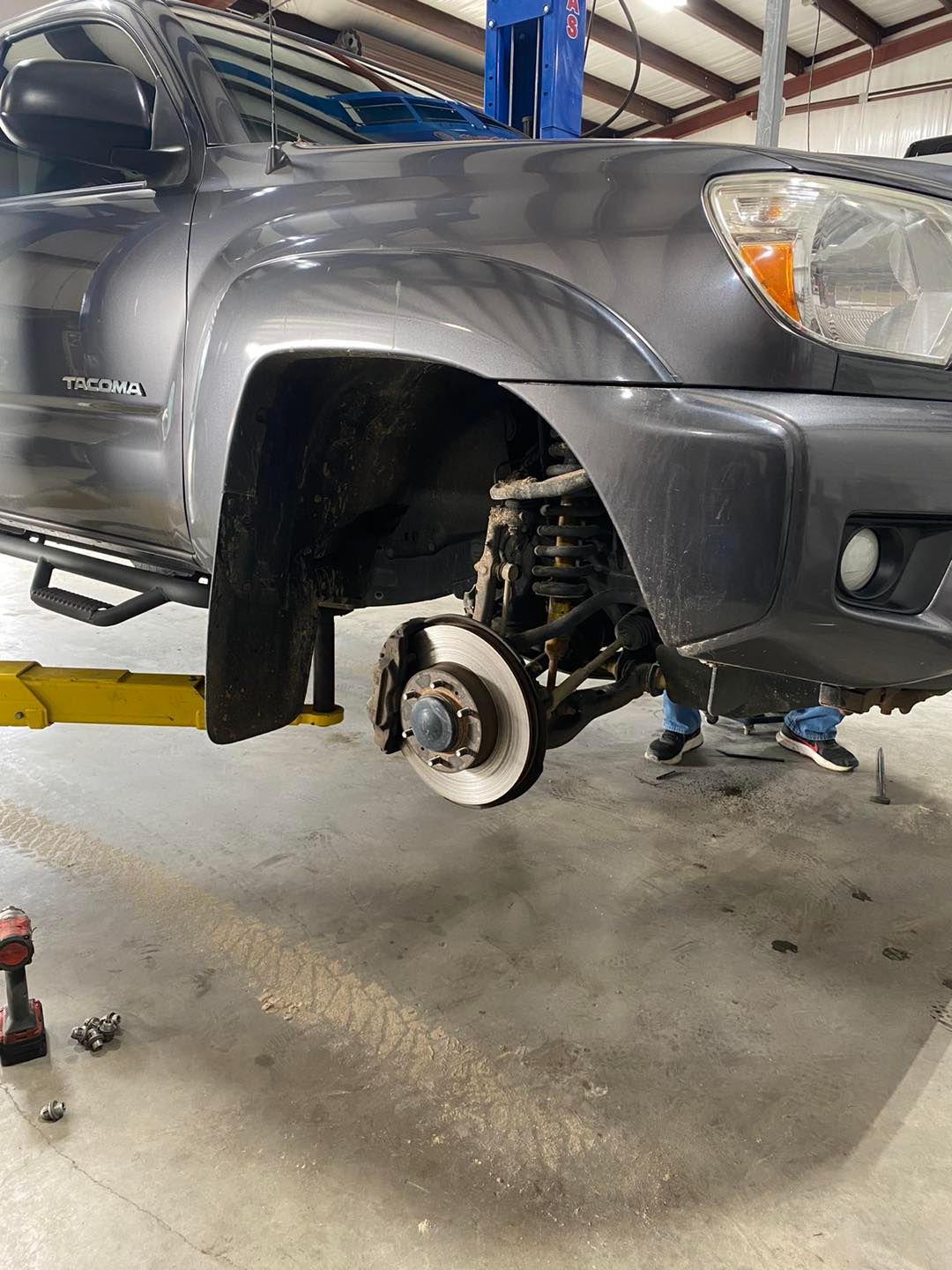
Brake work involves measuring pad material remaining, inspecting rotor surfaces for scoring or warping, testing caliper function for even pad contact, and checking brake fluid for moisture contamination that reduces hydraulic pressure. Parts are selected based on vehicle type and use—standard passenger vehicles receive different pad compounds than heavy-duty trucks that carry loads or tow regularly.
After service, you notice immediate differences: pedal feel firms up, stopping distance shortens, noise during braking disappears, and the vehicle tracks straight during stops without pulling to one side. Rotors that were resurfaced or replaced eliminate vibration, and new pads provide consistent friction without the fade that occurs when material wears too thin.
Brake work often reveals related issues—leaking calipers, contaminated fluid, or suspension wear that affects how weight transfers during stops. Addressing these components during brake service prevents comebacks and ensures the entire braking system functions as designed, particularly important for vehicles operating on rural roads where stopping distances matter and service access is less frequent.
Questions Before Starting Your Project
Customers in Cleveland typically ask about brake service timing, what the work includes, and how driving conditions affect component lifespan.
What indicates brakes need immediate attention?
Grinding noise means pad material is gone and metal backing plates are contacting rotors, causing damage that increases repair costs. Squeaking often signals wear indicators are exposed, meaning pads are near their service limit. Reduced pedal firmness or longer stopping distances indicate hydraulic issues or severely worn friction material that requires immediate inspection.
How does driving in Southeast Texas affect brake wear?
Frequent stops in humid conditions can accelerate rotor surface corrosion between brake applications, while rural road dust and debris increase pad wear rates. Vehicles that tow or carry loads generate more heat during braking, which wears pads faster and can warp rotors if cooling isn't adequate between stops.
What does brake service typically include?
Pad replacement involves installing new friction material, inspecting or resurfacing rotors if thickness allows, lubricating caliper slide pins, and testing hydraulic pressure. If rotors are too thin or warped beyond machining limits, replacement is necessary to restore proper contact and heat dissipation.
When should rotors be replaced instead of resurfaced?
Rotors below minimum thickness specifications cannot be machined safely, and severe scoring or heat cracks require replacement regardless of thickness. Warped rotors that cause pedal pulsation during stops are often resurfaced unless warping is severe or the rotor has been machined previously.
How long do brake components typically last?
Pad lifespan varies from fifteen thousand to fifty thousand miles depending on driving habits, vehicle weight, and whether the vehicle is used for towing. Rotors often last through two or three pad replacements if they remain within thickness specifications and aren't damaged by worn-out pads grinding into the surface.
Bulldog Tire LLC provides brake diagnostics that identify exactly what components need replacement and what remains serviceable, preventing unnecessary work while addressing safety concerns. Call (832) 599-9926 to arrange a brake system evaluation that establishes current component condition and service priorities.