Answers When Warning Lights Appear
Engine Diagnostics in Cleveland for vehicles showing check engine lights, reduced power, or rough idle conditions
A check engine light indicates that one or more sensors have detected conditions outside normal operating parameters, but the light itself doesn't reveal whether you're facing a loose gas cap, a failing oxygen sensor, or a misfire that's damaging the catalytic converter with each engine cycle. Diagnostic equipment reads the trouble codes stored in your vehicle's computer and displays live data streams showing what each sensor reports in real time, allowing a technician to verify whether a sensor is reporting accurately or generating false codes due to its own failure. Bulldog Tire LLC performs engine diagnostics on daily drivers and high-mileage work trucks across Southeast Texas, identifying root causes rather than replacing parts based on guesses that may or may not address the actual problem.
Modern vehicles monitor dozens of inputs—airflow, fuel pressure, exhaust oxygen content, engine temperature, throttle position—and compare those values against programmed expectations. When readings fall outside acceptable ranges, the system logs a code and may limit power to prevent damage. Diagnostics involve retrieving those codes, then testing the components and circuits associated with each fault to determine whether a sensor is failing, a mechanical problem exists, or wiring has corroded.
Schedule a diagnostic check to identify specific issues before replacing components that may not be the source of performance problems.
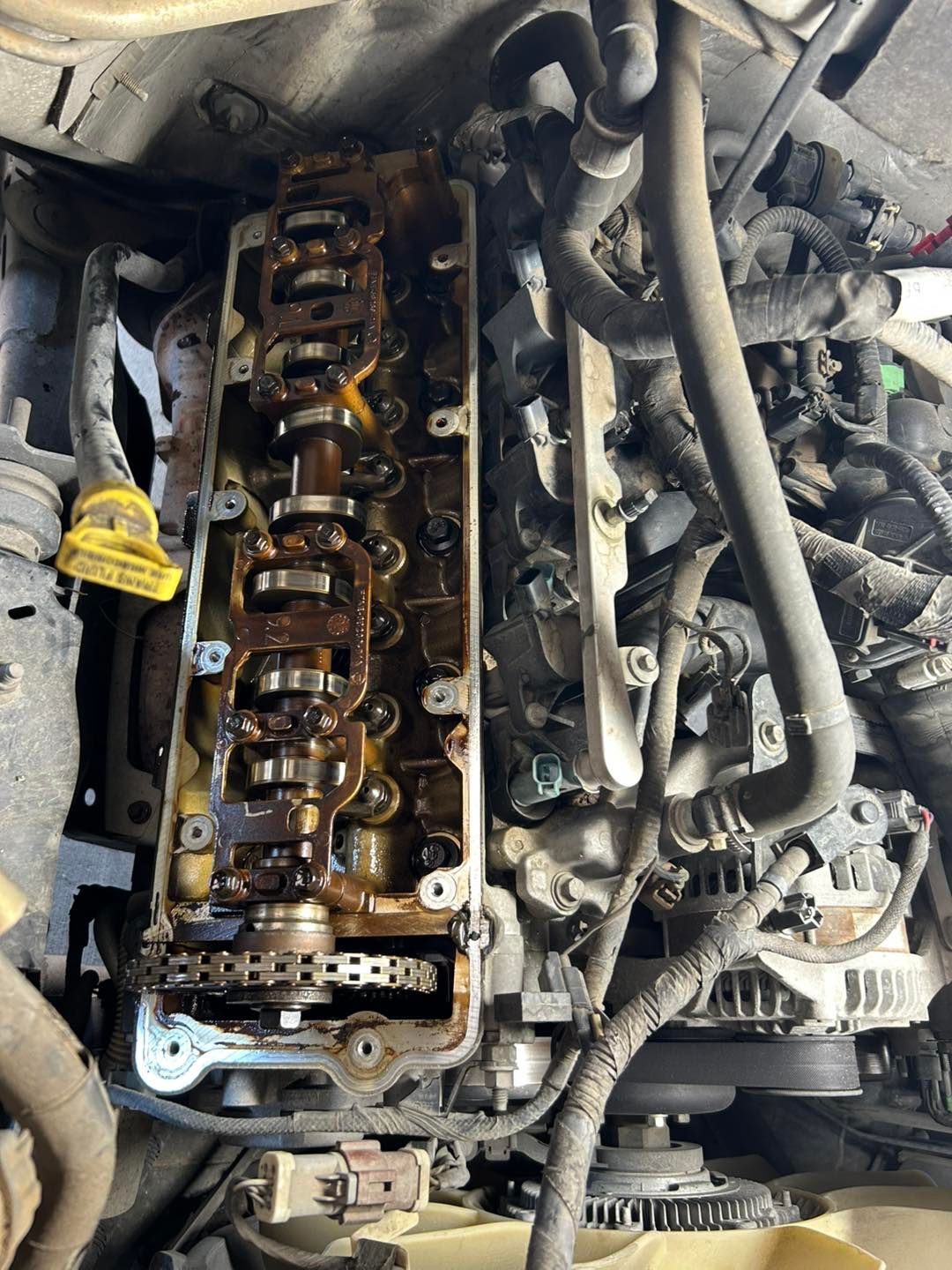
How Diagnostics Prevent Unnecessary Repairs
Reading trouble codes provides a starting point, but accurate diagnostics require testing beyond what the code description suggests, since a code for low fuel pressure might trace back to a weak pump, a clogged filter, or a pressure regulator that's stuck open. Live data shows whether fuel pressure actually drops during acceleration or remains stable, and comparing short-term and long-term fuel trim values reveals whether the engine is compensating for too much or too little fuel reaching the cylinders. Misfire codes indicate which cylinder is affected, but determining whether the cause is a bad spark plug, faulty ignition coil, or compression loss requires additional testing with specialized tools.
After diagnostics identify the failed component or system, you receive a clear explanation of what needs repair and why, along with what happens if the issue goes unaddressed. Resolving the root cause clears the warning light permanently rather than temporarily, and you'll notice that performance issues like hesitation during acceleration, poor fuel economy, or rough running disappear once the underlying problem is corrected. Addressing problems early prevents damage to downstream components—ignoring a misfire can destroy a catalytic converter that costs significantly more to replace than the spark plug or coil that caused the initial fault.
Some warning lights indicate emissions-related issues that don't affect immediate drivability but will cause inspection failures if left unresolved, while others signal conditions that can strand you or cause progressive damage the longer the vehicle operates. Diagnostics clarify which category your issue falls into and what timeline you're working with for repairs.
Questions About Diagnostic Services
Drivers in Cleveland frequently ask how diagnostics work, what the process reveals, and when immediate action is necessary versus optional.
What's the difference between reading codes and performing full diagnostics?
Code readers display stored fault codes but don't show live sensor data or allow component testing, while full diagnostics involve retrieving codes, analyzing real-time data, and testing circuits and mechanical systems to confirm the actual cause rather than just the symptom.
How do you know whether a sensor is reporting accurately or has failed?
Diagnostic tools display live sensor readings that can be compared against known specifications and cross-referenced with other sensors measuring related inputs—if one sensor shows values that contradict what other data suggests, that sensor is likely providing false information and needs replacement.
Why does the check engine light sometimes return after being cleared?
Clearing codes without repairing the underlying problem means the computer will detect the same fault condition again and re-illuminate the light, so diagnostics identify what needs fixing before codes are cleared, ensuring the light stays off once repairs are completed.
When does reduced engine power indicate a serious issue versus a temporary condition?
Reduced power mode activates when the computer detects conditions that could cause damage if the engine continues operating at full output, such as overheating, severe misfires, or transmission problems, so immediate diagnostics are needed to identify the trigger and prevent further damage.
What information helps diagnostics proceed more efficiently?
Noting when the problem occurs—during cold starts, at highway speeds, under load, or after the engine warms up—along with any changes in how the vehicle sounds or performs gives the technician context that narrows down which systems to test first.
Bulldog Tire LLC provides engine diagnostic services for passenger vehicles and work trucks throughout Southeast Texas, using diagnostic tools to identify performance issues and warning light causes accurately. Call (832) 599-9926 to schedule a diagnostic appointment and receive clear explanations of what your vehicle needs.